Microfibres vs Microplastic: What’s the Difference and Why is this important?
Published on Wednesday March 11, 2026
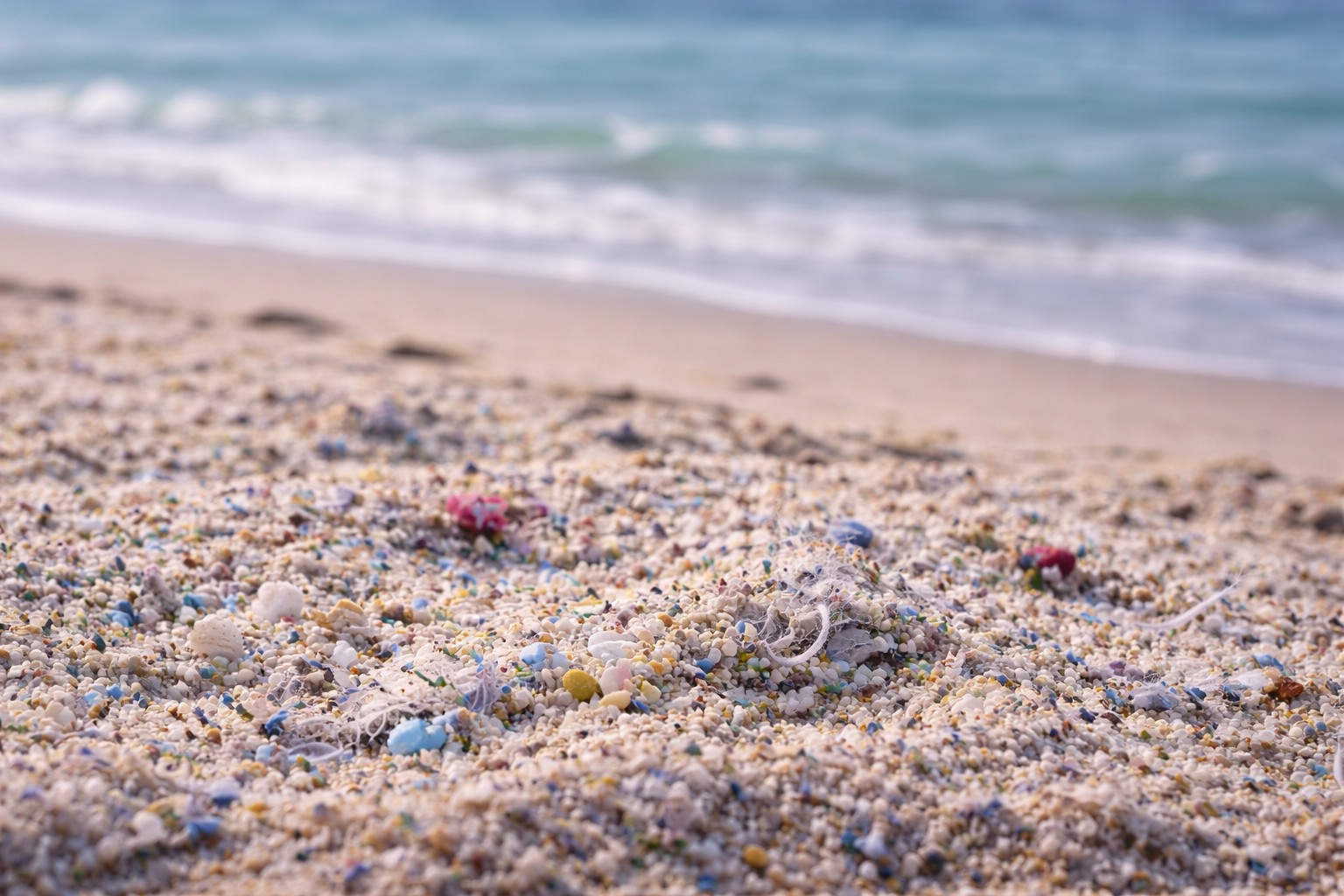
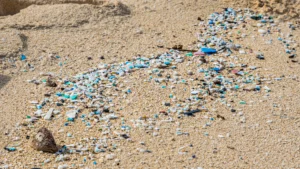
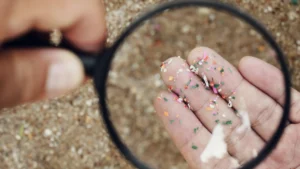
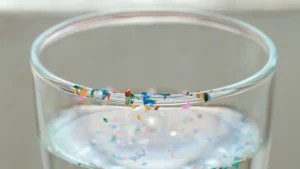
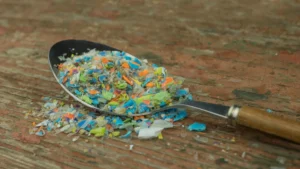
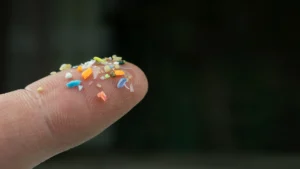
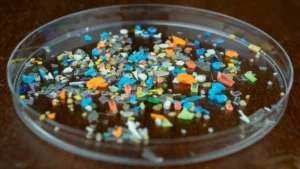
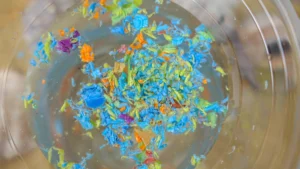
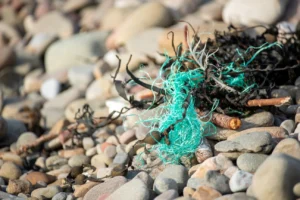
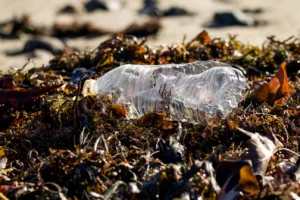
When people think of microplastic pollution, they usually imagine tiny, colourful fragments in confetti form from broken bottles, damaged fishing nets, or packaging that’s been pushed into the sea from winds.
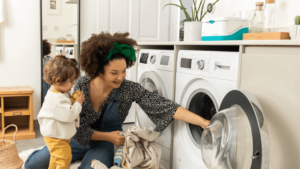
The truth is, a significant portion of microplastic pollution that enters our sea comes when washing our clothes in a washing machine.
But How?
Our clothes are made from textiles
Textiles are made from threads
Threads are made from fibres
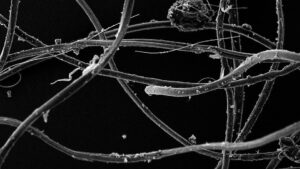
Fibers that are 5mm or less are called microfibres
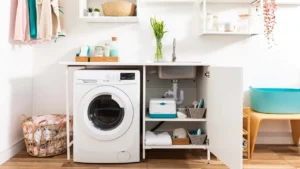
When we wash our clothes in a washing machine, the water, detergent, softener and fast-paced spinning of the drum helps the microfibres shed from our textiles. Once the microfibres are released into dirty grey water, they travel through the drainage system, bypass the treatment plant and flow straight into the sea.
But here’s the crucial point:
Not all microfibres are microplastics.
So why does understanding the difference matter?
Because treating all plastics the same way is ineffective, costly, and fails to stop pollution at its source. Microfibres can be recycled with a laundry machine filters, keeping materials in the system, not the sea.
Microfibres vs Microplastics
“Microfibre” describes shape and size of a tiny textile thread “Microplastic” describes a small plastic fragment
Some microfibres are plastic-based. Others are not.
Synthetic Microfibres (Microplastics)
Synthetic microfibres are made from petroleum-derived polymers, including:
Polyester
Nylon
Acrylic
Polypropylene
Spandex
Aramids
Modacrylic
Polyethylene
When these fibres shed from clothing or textiles, they are classified as microplastics. Because they are petroleum-based, they fall squarely under the category of microplastic pollution.
Synthetic microfibres are durable, lightweight, and resistant to degradation—qualities that make them useful in clothing. But in nature, this same durability becomes a problem. They can persist for long periods and even carry pollutants, acting as long-term contaminants in the environment.
Semi-Synthetic Microfibres
Also known as bio-based manmade fibres, examples include;
Viscose
Modal
Lyocell
Cupro
Bamboo Rayon
Acetate
Triacetate
These are made from natural polymers (usually cellulose or proteins) that are chemically processed and extruded into very fine filaments (microfibres).
While these aren’t plastics, these engineered fibres still shed from clothing, enter waterways, and can carry chemical treatments with them.
Natural Microfibres (non sythetic) Plant Based
Cotton
Linen
Hemp
Jute
Natural fibres generally biodegrade faster than synthetic ones. However, that does not make them impact-free. During the manufacturing process, they are often dyed, treated and finished with a range of chemicals, which remain attached when microfibres shed.
Natural Microfibres (non synthetic) Animal based
Wool
Silk
Cashmere
Even natural fibres shed during washing. When tiny enough, they become microfibres. While they biodegrade faster than synthetics, they can still carry dyes and chemicals into our waterways.
The Hidden Chemistry of Clothing
Every microfibre, regardless of origin, carries chemical additives.
These can include:
Dyes and pigments
Finishing agents such as formaldehyde-based resins
Flame retardant
Water and stain repellents
Antimicrobial agents
Plasticisers and stabilisers
Bleaching and processing chemicals
Some of these substances are tightly regulated due to concerns about toxicity, persistence or bioaccumulation (Pollutants piling up inside living things).
So when microfibres enter waterways, they are not simply inert strands. They can act as chemical carriers.
Riding the Plastisphere
Once microfibres enter waterways, they quickly develop a biofilm, a thin microbial coating that attracts bacteria, algae, and fungi. Scientists refer to this as the “plastisphere”, a miniature ecosystem living on plastic surfaces.
In fact, microfibres are particularly good at hosting microbes because:
Their long, thin structure provides ample attachment points
Their high surface-area-to-volume ratio makes them ideal for colonisation
They remain suspended in water longer than heavier plastic fragments
Rather than behaving like passive debris, microfibres can act as mobile rafts for microbes, similar to barnacles clinging to driftwood in the ocean.
Plastic Rafts for Pathogens
Microfibres don’t just float—they carry tiny passengers. They can transport bacteria downstream from wastewater discharge points and shield microbes from UV light and predators, helping them survive longer than free-floating cells.
Pathogens like Vibrio, E. coli, and Pseudomonas have been found on microplastics, and even viruses can attach to fibres or hide in biofilms. Early research suggests that microfibres may help microbes persist in waterways, making these tiny threads more than just pollution—they are mobile ecosystems with real impacts on our seas.
Impacts from Rivers to Reefs
Microfibres move easily from rivers to the ocean. Wastewater treatment plants can release them alongside microbes, while sedimentation patterns determine where they settle, often in riverbeds, estuaries, and coastal zones.
Once in the sea, microfibres can drift long distances, forming increasingly complex biofilm communities.
This can have several ecological impacts, including:
Damage to phytoplankton, which produce over half of the planet’s oxygen
Disruption of zooplankton, the foundation of the marine food chain
Contamination of seafood, particularly filter feeders such as mussels
Transmission of coral diseases
Large-scale disease outbreaks directly linked to microfibres are still being studied. However, researchers are increasingly examining their role in transporting antibiotic resistance genes and concentrating pathogens in shellfish-growing waters.
Because synthetic microfibres persist for longer, they can act as long-term transport platforms for microbes.
Why is this Important?
Microfibre pollution is not just about visible plastic fragments. It is about:
Chemistry
Microbiology
Water systems
Food chains
Ecosystem stability
And it begins in the most ordinary place: our washing machines.
Once fibres enter our water, they do not simply disappear.
They interact. They travel. They persist.
And the systems they touch are far larger than the clothes we wear.
Turning Understanding into Action
Understanding the problem is one thing. Stopping it is another.
If microfibres start in our washing machines, that’s where intervention makes the most sense.
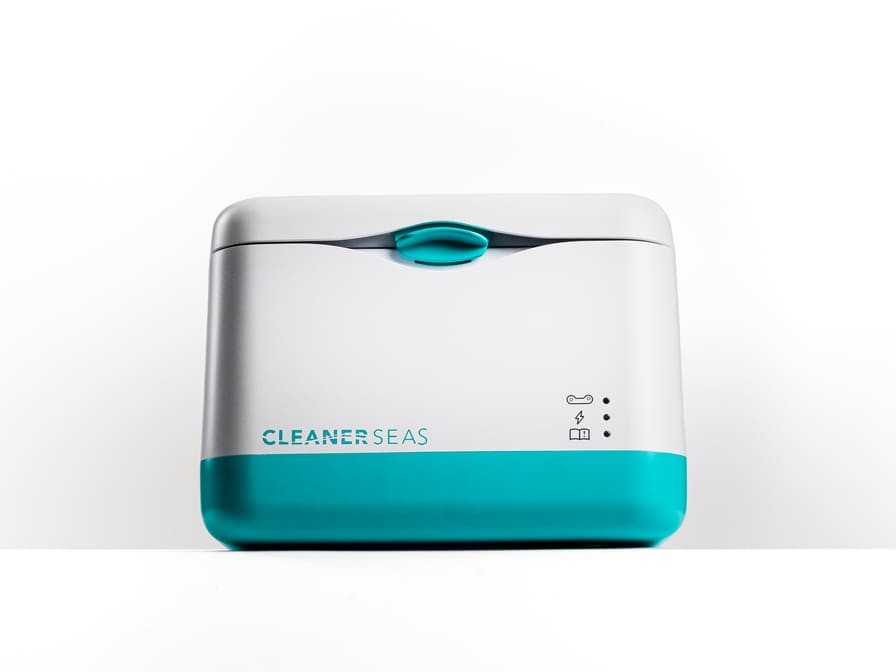
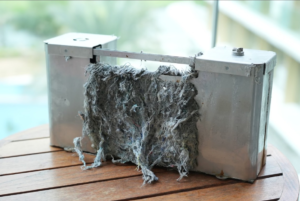
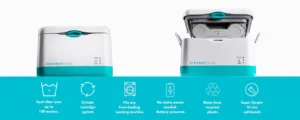
The Indi™ Home Microfibre Filter retrofits onto domestic washing machines, capturing microfibres before they enter the drainage system. Working quietly in the background, it intercepts synthetic, semi-synthetic, and natural fibres at source, preventing them from travelling downstream and becoming a larger environmental problem.
For commercial and industrial laundries, Indikon™ Industrial Filters offer a scalable solution to microfibre pollution. Designed for high-flow environments like hospitality, healthcare, and textile facilities, they integrate into existing laundry systems and capture microfibres before they reach drains or the sea.
By preventing microfibre release at scale, they reduce environmental harm while helping organisations meet sustainability goals, generate data for reporting, and, where water is a key material topic, support responsible water stewardship.
The Indi™ Home Microfibre Filter and the Indikon™ Industrial Filters are engineered to be fully closed loop and adopt the circular economy principles as once the microfibres are captured they are returned to Cleaner Seas Group for recycling.
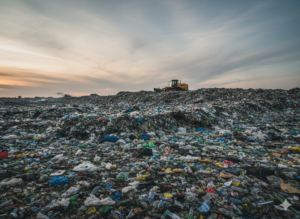
There is no longer a need to put microplastic pollution in home refuse, landfill or be incinerated.
Microplastic pollution may be complex. The solution does not have to be.
Stop microfibre pollution at source. Dispose of microfibres responsibly. Protect our seas.
You may also like
Latest News & Updates
News and Press
Tackling microplastic pollution: the APPG’s priorities for the next five years
Microplastic pollution reaches far beyond our seas. These persistent particles are found in waterways, agricultural...
6 min read
News and Press
Cleaner Seas joins Aurora Expeditions research voyage aboard Douglas Mawson
Cleaner Seas Group is heading to sea as part of an important research trip with...
4 min read
News and Press
Cleaner Seas Sponsors Endurance Rowing Race Around Great Britain
We’re Proud to be Headline Sponsors of the GB Row Challenge We’re thrilled to announce...
4 min read
News and Press
Cleaner Seas Group Certifies as a B Corporation
Cornwall, UK, June 2026: Cleaner Seas Group is proud to announce that it has officially...
3 min read
News and PressMicroplastics
What Is Bluewashing?
When Ocean Promises Don’t Match Ocean Protection When companies talk about protecting the ocean, the...
5 min read
News and PressMicroplastics
Sustainable Tourism: The Hidden Cost of Laundry
Sustainability is now firmly on the agenda across hospitality. From reducing single-use plastics to improving...
4 min read
News and PressMicroplastics
New research aims to reduce microfibre pollution released from cruise and hotel laundry.
Microfibre pollution from large-scale laundry operations goes under the microscope Microfibre pollution from large-scale laundry...
4 min read
News and PressMicroplastics
Microplastic Soup: The Crisis We Can’t Always See
When people hear the phrase microplastic soup, they often envision floating islands of bottles and...
9 min read
News and PressMicroplastics
Shining a Light on Microplastics and Real Solutions
Cleaner Seas Group® appeared on BBC One’s The One Show, helping bring one of the...
3 min read
Microplastics
The End of Plastic Landfill: Why 2026 Will Mark a Regulatory Tipping Point
For years now, plastics have been filling up our landfills. 2026 marks the start of...
4 min read
Microplastics
The Next Chapter for Cleaner Seas Group: Opening the World-First Microfibre Recycling Centre.
After years of planning, problem-solving and a fair bit of Cornish grit, we’ve finally done...
3 min read
Microplastics
Recycling Microfibres to Power the Clean Battery Future.
At Cleaner Seas Group, we’ve always believed that tackling ocean pollution and advancing clean technology...
4 min read
Microplastics
What Are Microplastics and Why Are They a Threat to Our Oceans?
Microplastics have become one of the most significant environmental challenges of our time. These tiny...
4 min read
Microplastics
What Are Microfibres and How Do They Impact the Environment?
Microfibres are one of the most common yet overlooked contributors to environmental pollution. These tiny...
3 min read
LegislationMicroplastics
The WI and APPG Leading the Charge
Microplastic pollution is one of the most pressing environmental challenges of our time. The Women’s...
4 min read
Microplastics
The Hidden Problem: Industrial Microfibres and Microplastics
The problem of microfibres and microplastics in our waterways has long been linked to domestic...
5 min read
Microplastics
Tackling Microfibre Pollution: Solutions for Cleaner Waterways
Microfibre pollution is a growing environmental issue, with billions of microscopic plastic fibres entering our...
4 min read
Microplastics
Natural Fibres are not necessarily the answer to microplastic Polution
Microplastics, particularly microfibres shed from textiles during washing, have emerged as a significant environmental concern....
2 min read
Microplastics
Microplastics in the laundry
Microplastics are an invisible menace infiltrating our oceans, ecosystems, and even our food chains. Among...
4 min read
Microplastics
The Silent Threat: Microplastics and Their Devastating Impact on Marine Life
Microplastics have become an insidious pollutant in our oceans, threatening marine life and the health...
4 min read
Microplastics
How to Wash Your Clothes and Be Kind to the Planet: Top 5 Tips
Washing your clothes might seem like a simple everyday task, but did you know it...
4 min read
MicroplasticsLegislation
Are Waste water Treatment Plants Not Filtering Microfibres?–NO!
Microfibres, those minuscule fibres shed from synthetic textiles during washing, are an invisible but pervasive...
5 min read
News and Press
Plastic Pollution in Our Oceans, Our Beaches and Waterways
Plastic pollution is in our water systems, the air we breath, in our soil, in...
3 min read
Industry News
Marine-i and Plymouth University Support Research and Development of Indikon-1
Cleaner Seas Group was set up in Cornwall in Autumn 2018 with a mission to...
2 min read
Industry News
Is Your Wash Polluting the Ocean?
What are microfibres? Microfibres are a type of microplastic; tiny plastic fibres 5mm or less (Less than the...
2 min read
News and Press
Coldplay Support Cleaner Seas Group
The Cleaner Seas Team always dream big in our quest to protect our Ocean and...
1 min read
News and Press
Cleaner Seas Microfibre Filter for Washing Machines – Indikon-1
You probably know by now, that your washing machine releases up to 700,000 Microplastic fibres...
1 min read
News and Press
Joining Forces to Save Our Seas
We work to give back to the Sea every day, 100%, but none of us...
1 min read
Industry News
Case Study by Plymouth University – Cleaner Seas Group
Innovative technology to remove microplastics from the environment Cleaner Seas Group was set up in...
6 min read
Microplastics
Cleaner Seas Group Launches Groundbreaking Microplastic Recycling Centre with UK Shared Prosperity Fund Support
The Cleaner Seas Group is developing a world-first Microfibre Recycling Centre in Bude, Cornwall. This...
1 min read
News and Press
Tui Blog Post 2
Since 2017 Cleaner Seas have worked at grassroots level in raising awareness about microplastics in...
1 min read
News and Press
Tui Blog Post 1
Monty Halls is a broadcaster, speaker, naturalist, former Royal Marine, marine biologist, travel writer and...
1 min read
Industry News
Microplastics Bill Introduced in the House of Commons
The 30th November 2021 saw another big step forward in the fight against microplastic pollution....
1 min read
Microplastics
Award Recognition for Cleaner Seas Tech
Since 2017 Cleaner Seas have worked at grassroots level in raising awareness about microplastics in...
2 min read
News and Press
Generation Sea Change: An Interview with Explorer Monty Halls.
Monty Halls is a broadcaster, speaker, naturalist, former Royal Marine, marine biologist, travel writer and...