New research aims to reduce microfibre pollution released from cruise and hotel laundry.

Published on Wednesday April 15, 2026

Microfibre pollution from large-scale laundry operations goes under the microscope

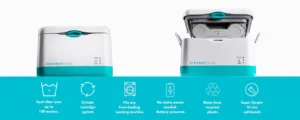
Microfibre pollution from large-scale laundry operations is emerging as a significant and largely unseen environmental issue. New research led by the University of Portsmouth is using Cleaner Seas Groupโ€™s industrial filtration technology – already deployed in commercial settings to better understand the scale of the problem and how it can be prevented before it reaches our waterways.

The study builds on previous data that revealed more than 700,000 microfibres can be released from clothing during a single domestic wash. Researchers are now turning their attention to industrial laundry systems, where the scale of washing and potential pollution is vast.

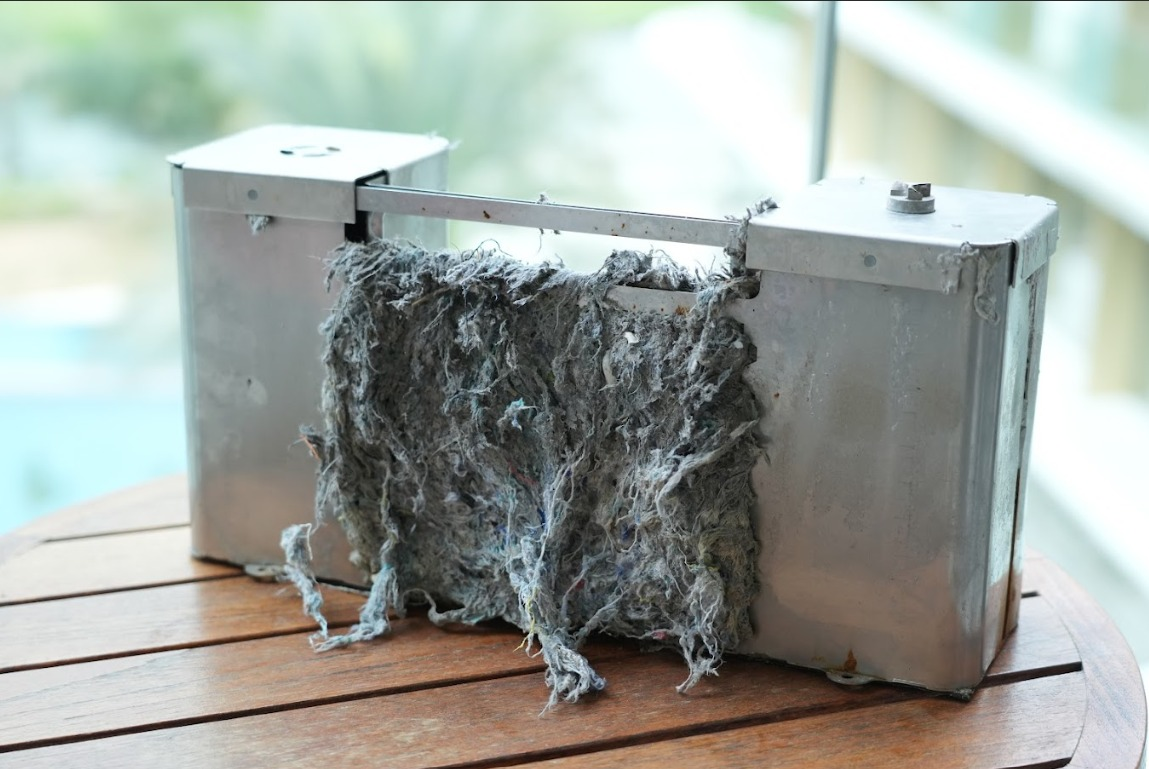
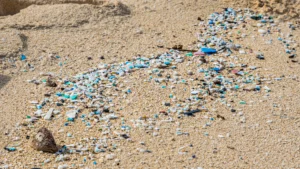
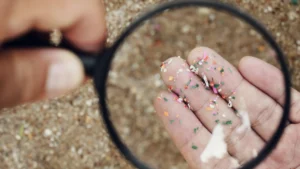
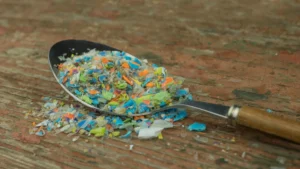
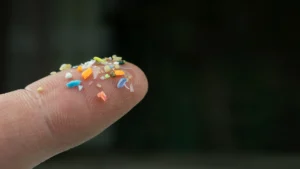
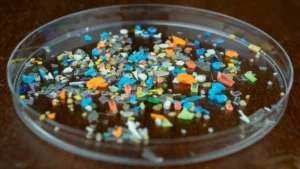
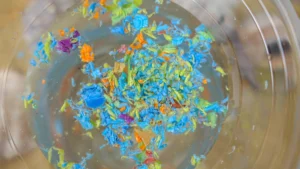
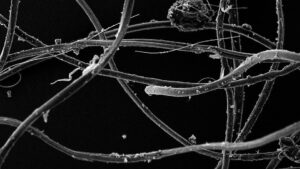
Early results from the first in-situ trials already show the true scale of the issue. A preliminary subsample taken from the filtration system has revealed hundreds of tiny microplastic threads packed into a space smaller than a pound coin. Using the University’s laboratory, the researchers will analyse the full suite of Cleaner Seas Group samples collected from the cruise and hotel sector and reveal the typical number and type of microfibres removed from greywater when attaching a microplastic filter.

“Even from our very first subsample, we were struck by the sheer number of fibres captured.”

Felicity Webster, Research Associate, Revolution Plastics Instituteย at the University of Portsmouth

Research Associate Felicity Webster, from the Revolution Plastics Institute at the University of Portsmouth is carrying out the initial investigations. She said: โ€œEven from our very first subsample, we were struck by the sheer number of fibres captured. Over the coming months, we will build a clearer picture of the volume and composition of fibres produced by industrial laundry, and how effective filtration can be in stopping them.โ€

The project is testing washing machines in real-world settings over the next four months, with permission from industry partners. Researchers hope the work will deliver evidence that filtration systems can significantly reduce the number of fibres discharged into marine and land environments.

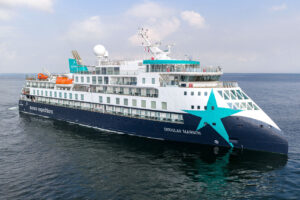
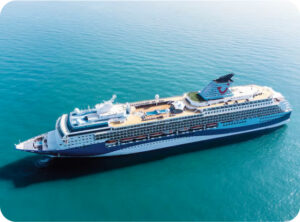
Cruise tourism remains popular, with around 1.7 million UK residents taking cruise holidays in 2022. On large ships carrying around 6,000 passengers and crew, daily greywater production can reach between 900,000 and 1.2 million litres โ€“ enough to fill up to 8,000 bathtubs. A substantial proportion comes from onboard laundries, which process several tonnes of laundry each day, including tens of thousands of sheets, towels, pillowcases and uniforms.

“Microfibres are now found everywhere from deep ocean sediments to the food we eat, yet most people donโ€™t realise how much is released during everyday laundry. When you scale this up to cruise ships and hotels processing tonnes of textiles each day, the potential environmental impact becomes enormous.”

Professor Fay Couceiro, University ofย Portsmouthโ€™s School of Civil Engineering and Surveying

 Professor Fay Couceiro, from the University of Portsmouthโ€™s School of Civil Engineering and Surveying, said: โ€œMicrofibres are now found everywhere from deep ocean sediments to the food we eat, yet most people donโ€™t realise how much is released during everyday laundry. When you scale this up to cruise ships and hotels processing tonnes of textiles each day, the potential environmental impact becomes enormous. Preventing pollution at source is one of the most effective actions we can take to protect marine ecosystems and reduce long-term environmental harm.โ€

Dave Miller, CEO at Cleaner Seas Group said โ€œRegulation is shifting fast, and for cruise and tourism operators, water and wastewater are already critical operational issues. Microfibre pollution may be invisible, but at scale it cannot be ignored. This is not just about reporting on the problem, itโ€™s about taking action, adopting solutions & measuring the impact. The principle of One Health recognises that the health of our oceans, ecosystems and people are fundamentally interconnected, so must be addressed in unison.

“Regulation is shifting fast, and for cruise and tourism operators, water and wastewater are already critical operational issues. Microfibre pollution may be invisible, but at scale it cannot be ignored.”

Dave Miller, CEO at Cleaner Seas Group

The findings will contribute to a growing body of evidence on microfibre pollution and the effectiveness of microfibre filtration when plugged directly into industrial washing machines. As regulatory focus on water and waste intensifies, the work underscores the importance of approaches that can be implemented in real-world settings to reduce environmental impact.

Results of this study are expected later this year.

Weโ€™re fortunate to be supported and part-funded by the UK Government Shared Prosperity Fund, with Cornwall Council managing projects like ours through the Cornwall & Isles of Scilly Good Growth Fund.
You may also like

Latest News & Updates

Microfibres vs Microplastics
News and PressMicroplastics

Microfibres vs Microplastic: Whatโ€™s the Difference and Why is this important?ย 

When people think of microplastic pollution, they usually imagine tiny, colourful fragments in confetti form...

6 min read
What Is Microplastic Soup
News and PressMicroplastics

Microplastic Soup: The Crisis We Canโ€™t Always See

When people hear the phrase microplastic soup, they often envision floating islands of bottles and...

9 min read
Microplastic and Real Solutions
News and PressMicroplastics

Shining a Light on Microplastics and Real Solutions

Cleaner Seas Groupยฎ appeared on BBC Oneโ€™s The One Show, helping bring one of the...

3 min read
The End of Plastic Landfill: Why 2026 Will Mark a Regulatory Tipping Point
Microplastics

The End of Plastic Landfill: Why 2026 Will Mark a Regulatory Tipping Point

For years now, plastics have been filling up our landfills. 2026 marks the start of...

4 min read
World-first Microfibre Recycling Centre Launch
Microplastics

The Next Chapter for Cleaner Seas Group: Opening the World-First Microfibre Recycling Centre.

After years of planning, problem-solving and a fair bit of Cornish grit, weโ€™ve finally done...

3 min read
Cleaner Seas, EV Battery
Microplastics

Recycling Microfibres to Power the Clean Battery Future.

At Cleaner Seas Group, weโ€™ve always believed that tackling ocean pollution and advancing clean technology...

4 min read
Microplastics Underwater In Ocean
Microplastics

What Are Microplastics and Why Are They a Threat to Our Oceans?

Microplastics have become one of the most significant environmental challenges of our time. These tiny...

4 min read
Microfibre Recycling Blue
Microplastics

What Are Microfibres and How Do They Impact the Environment?

Microfibres are one of the most common yet overlooked contributors to environmental pollution. These tiny...

3 min read
Microplastics On The Beach (1)
LegislationMicroplastics

The WI and APPG Leading the Charge

Microplastic pollution is one of the most pressing environmental challenges of our time. The Womenโ€™s...

4 min read
Magnify Microplastics Beach
Microplastics

The Hidden Problem: Industrial Microfibres and Microplastics

The problem of microfibres and microplastics in our waterways has long been linked to domestic...

5 min read
Microplastics In Your Drink
Microplastics

Tackling Microfibre Pollution: Solutions for Cleaner Waterways

Microfibre pollution is a growing environmental issue, with billions of microscopic plastic fibres entering our...

4 min read
Microplastics On A Spoon
Microplastics

Natural Fibres are not necessarily the answer to microplastic Polution

Microplastics, particularly microfibres shed from textiles during washing, have emerged as a significant environmental concern....

2 min read
Microplastics On A Finger
Microplastics

Microplastics in the laundry

Microplastics are an invisible menace infiltrating our oceans, ecosystems, and even our food chains. Among...

4 min read
Microplastics In The Ocean
Microplastics

The Silent Threat: Microplastics and Their Devastating Impact on Marine Life

Microplastics have become an insidious pollutant in our oceans, threatening marine life and the health...

4 min read
Microplastics In Petridish
Microplastics

How to Wash Your Clothes and Be Kind to the Planet: Top 5 Tips

Washing your clothes might seem like a simple everyday task, but did you know it...

4 min read
Microplastics In A Jar
MicroplasticsLegislation

Are Waste water Treatment Plants Not Filtering Microfibres?โ€“NO!

Microfibres, those minuscule fibres shed from synthetic textiles during washing, are an invisible but pervasive...

5 min read
Green Plastic On Stoney Beach
News and Press

Plastic Pollution in Our Oceans, Our Beaches and Waterways

Plastic pollution is in our water systems, the air we breath, in our soil, in...

3 min read
Brian Yurasits
Industry News

Marine-i and Plymouth University Support Research and Development of Indikon-1

Cleaner Seas Group was set up in Cornwall in Autumn 2018 with a mission to...

2 min read
Two Filters
Industry News

Is Your Wash Polluting the Ocean?

What are microfibres?ย  Microfibres are a type of microplastic; tiny plastic fibres 5mm or less (Less than the...

2 min read
Coldplay Logo
News and Press

Coldplay Support Cleaner Seas Group

The Cleaner Seas Team always dream big in our quest to protect our Ocean and...

1 min read
Washing Machine
News and Press

Cleaner Seas Microfibre Filter for Washing Machines – Indikon-1

You probably know by now, that your washing machine releases up to 700,000 Microplastic fibres...

1 min read
Sea Grass
News and Press

Joining Forces to Save Our Seas

We work to give back to the Sea every day, 100%, but none of us...

1 min read
Microsplastics Microscopic
Industry News

Case Study by Plymouth University – Cleaner Seas Group

Innovative technology to remove microplastics from the environment Cleaner Seas Group was set up in...

6 min read
Microplastics Microfibre Recycling
Microplastics

Cleaner Seas Group Launches Groundbreaking Microplastic Recycling Centre with UK Shared Prosperity Fund Support

The Cleaner Seas Group is developing a world-first Microfibre Recycling Centre in Bude, Cornwall. This...

1 min read
Frame 190
News and Press

Tui Blog Post 2

Since 2017 Cleaner Seas have worked at grassroots level in raising awareness about microplastics in...

1 min read
Image
News and Press

Tui Blog Post 1

Monty Halls is a broadcaster, speaker, naturalist, former Royal Marine, marine biologist, travel writer and...

1 min read
Image
Industry News

Microplastics Bill Introduced in the House of Commons

The 30th November 2021 saw another big step forward in the fight against microplastic pollution....

1 min read
Image
Microplastics

Award Recognition for Cleaner Seas Tech

Since 2017 Cleaner Seas have worked at grassroots level in raising awareness about microplastics in...

2 min read
Image
News and Press

Generation Sea Change: An Interview with Explorer Monty Halls.

Monty Halls is a broadcaster, speaker, naturalist, former Royal Marine, marine biologist, travel writer and...

5 min read

Want to Join our Crew of Sea Savers?

Get monthly ocean news, offers, events and updates on our mission.

By clicking subscribe, you agree to our Terms and Conditions.

Signup To Cleanerseas Mailing List