
News and Press
Cleaner Seas joins Aurora Expeditions research voyage aboard Douglas Mawson
Cleaner Seas Group is heading to sea as part of an important research trip with...
4 min read
Microplastic pollution reaches far beyond our seas. These persistent particles are found in waterways, agricultural soils, food systems and the human body. Once released, they are extremely difficult to remove, making prevention at source a central part of tackling the problem.
A new report from the All-Party Parliamentary Group on Microplastics sets out practical actions the UK could take over the next five years. Tackling Microplastic Pollution in the UK: Evidence and priority actions for the next five years (2026–2031) brings together scientific research and stakeholder evidence to identify policy gaps and propose a coordinated response.
For Cleaner Seas Group, its recommendations on microfibre capture, washing-machine filtration and responsible management of captured material are particularly relevant.
Established in September 2020, the APPG on Microplastics brings together parliamentarians and stakeholders to examine the environmental and human health impacts of microplastic pollution.
Chaired by Alberto Costa MP, with the National Federation of Women’s Institutes providing its secretariat, the group offers a forum for evidence sharing, policy discussion and engagement across sectors.
Its latest report follows its first inquiry and report in 2021. Drawing on 36 written submissions alongside academic research, the 2026 inquiry considers the sources and impacts of microplastics and the actions needed to strengthen the UK’s response.
The APPG is an informal parliamentary group. Its report sets out recommendations to inform government action; these are not requirements already introduced into law.
The report identifies microplastic releases throughout the plastics lifecycle, from production and manufacturing to everyday use and disposal.
Major sources include tyres, textiles, paints, plastic pellets, packaging and agricultural plastics. Wastewater systems also act as important pathways through which particles move into the wider environment.
Once released, microplastics can persist for decades or centuries, breaking down into smaller particles while contamination continues to accumulate.
The report therefore prioritises preventing pollution before it enters the environment. It also recognises that scientific understanding will continue to develop, particularly around health impacts and safe exposure thresholds. Its position is that these uncertainties should not prevent precautionary action.
The report identifies five areas for action between 2026 and 2031:
Establish a clear national framework: develop a UK Microplastics Strategy or Bill, with time-bound reduction targets and coordinated government leadership.
Regulate major sources: introduce product design and material standards that reduce shedding and strengthen controls on avoidable microplastic releases.
Expand producer responsibility: make producers more accountable for pollution across their products’ lifecycles and use economic incentives to encourage better design.
Strengthen wastewater, sludge and soil protections: improve filtration and control the movement of contamination into waterways and agricultural land.
Improve monitoring and evidence: establish consistent definitions, testing methods and national monitoring to support regulation and measure progress.
Together, these proposals aim to replace fragmented measures with a coordinated, preventative approach.
One of the report’s clearest recommendations is to require microfibre filters on new washing machines.
Crucially, the proposal includes standards for filter performance, maintenance and disposal. Capturing fibres is one part of the process; managing the collected material responsibly is also necessary.
The report’s sector discussion explores phased implementation, incentives for certified retrofit filters and public education on correct use and disposal. It also identifies effective filtration and monitoring of industrial textile wastewater as an area for further action.
These sector proposals are presented as suggestions for further research and dialogue, while mandatory microfibre capture on new washing machines forms part of the report’s main priority actions.
Wastewater treatment can move microplastics between environmental systems rather than eliminate them.
The report explains that particles captured during treatment can become concentrated in sewage sludge, which is then applied to agricultural land. This creates a route into soils and raises concerns about soil health, agricultural productivity and food systems.
Its recommendations include advanced wastewater filtration, stronger permitting requirements for sludge and precautionary limits for microplastics and associated contaminants in sludge applied to land.
This reinforces the importance of considering where pollution goes after it has been captured.
The report acknowledges Cleaner Seas Project among the organisations that contributed evidence, expertise and insight to the inquiry.
The APPG’s report makes an important distinction: capturing microfibres is only part of the solution. What happens to the material after it has been captured matters too.
That principle sits at the heart of Cleaner Seas Group’s approach.
Rather than treating filtration as the end point, Cleaner Seas Group has developed a circular system built around capturing microfibres at source, collecting the captured material and returning it for responsible recycling.
This model is already being demonstrated at commercial scale. Following a successful trial aboard Marella Explorer, which recorded a 99% microfibre capture rate, Marella Cruises began rolling Cleaner Seas Group’s INDIKON filtration technology across its fleet. TUI has subsequently expanded the technology into hotel operations, demonstrating how source-capture systems can be deployed across complex international tourism operations.
But preventing pollution is only the first step.
Captured microfibres are returned to Cleaner Seas Group’s recycling facility in Cornwall, where the company is developing ways to transform a material that would otherwise become environmental pollution into useful new resources.
Working with academic and commercial partners, Cleaner Seas Group is also investigating how this recovered carbon-rich waste stream can contribute to the development of advanced materials, including materials for future battery applications.
This creates a fundamentally different approach to microplastic pollution: capture it before it reaches the environment, keep it out of landfill and find productive new uses for the material recovered.
The APPG’s recommendations therefore represent more than an important policy development. They reinforce the need for an end-to-end approach to microplastic pollution — from prevention and capture through to responsible management, monitoring and circular reuse.
Cleaner Seas Group believes the technology to begin delivering that transition already exists.
The challenge for the next five years is to move from isolated interventions to widespread implementation — bringing policymakers, manufacturers, commercial laundry operators, the water sector and technology providers together to prevent microplastic pollution at source and ensure that what is captured never becomes pollution again.
The accompanying stakeholder toolkit highlights an opportunity to ensure microplastic pollution is addressed within planned reforms of the water system in England and Wales.
It encourages stakeholders to share the report, raise its recommendations with policymakers and regulators, and reference its findings in consultations and policy submissions.
The report sets out a practical direction for the next five years: reduce releases at source, strengthen protections across environmental pathways and build the evidence needed to track progress.
Cleaner Seas Group is heading to sea as part of an important research trip with...

We’re Proud to be Headline Sponsors of the GB Row Challenge We’re thrilled to announce...
Cornwall, UK, June 2026: Cleaner Seas Group is proud to announce that it has officially...
When Ocean Promises Don’t Match Ocean Protection When companies talk about protecting the ocean, the...

Sustainability is now firmly on the agenda across hospitality. From reducing single-use plastics to improving...
Microfibre pollution from large-scale laundry operations goes under the microscope Microfibre pollution from large-scale laundry...

When people think of microplastic pollution, they usually imagine tiny, colourful fragments in confetti form...

When people hear the phrase microplastic soup, they often envision floating islands of bottles and...

Cleaner Seas Group® appeared on BBC One’s The One Show, helping bring one of the...
For years now, plastics have been filling up our landfills. 2026 marks the start of...

After years of planning, problem-solving and a fair bit of Cornish grit, we’ve finally done...

At Cleaner Seas Group, we’ve always believed that tackling ocean pollution and advancing clean technology...

Microplastics have become one of the most significant environmental challenges of our time. These tiny...
Microfibres are one of the most common yet overlooked contributors to environmental pollution. These tiny...
Microplastic pollution is one of the most pressing environmental challenges of our time. The Women’s...
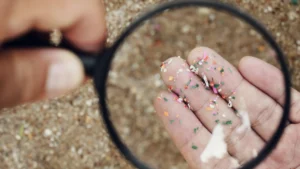
The problem of microfibres and microplastics in our waterways has long been linked to domestic...
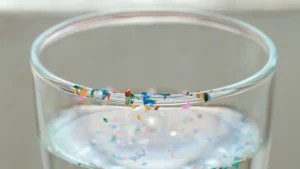
Microfibre pollution is a growing environmental issue, with billions of microscopic plastic fibres entering our...
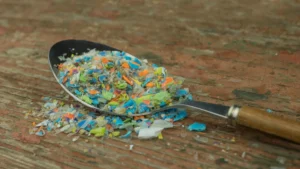
Microplastics, particularly microfibres shed from textiles during washing, have emerged as a significant environmental concern....
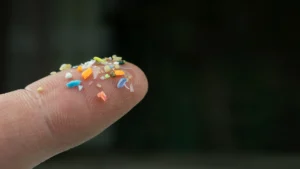
Microplastics are an invisible menace infiltrating our oceans, ecosystems, and even our food chains. Among...
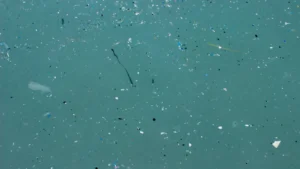
Microplastics have become an insidious pollutant in our oceans, threatening marine life and the health...
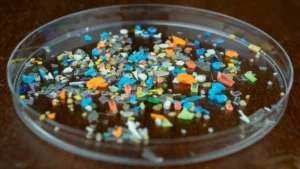
Washing your clothes might seem like a simple everyday task, but did you know it...
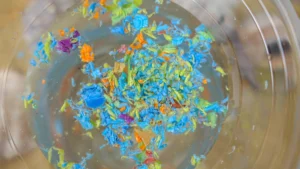
Microfibres, those minuscule fibres shed from synthetic textiles during washing, are an invisible but pervasive...
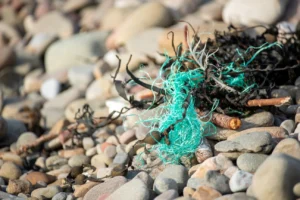
Plastic pollution is in our water systems, the air we breath, in our soil, in...
Cleaner Seas Group was set up in Cornwall in Autumn 2018 with a mission to...
What are microfibres? Microfibres are a type of microplastic; tiny plastic fibres 5mm or less (Less than the...

The Cleaner Seas Team always dream big in our quest to protect our Ocean and...
You probably know by now, that your washing machine releases up to 700,000 Microplastic fibres...
We work to give back to the Sea every day, 100%, but none of us...
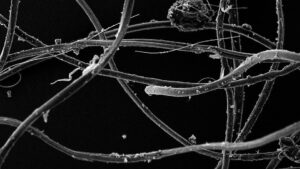
Innovative technology to remove microplastics from the environment Cleaner Seas Group was set up in...
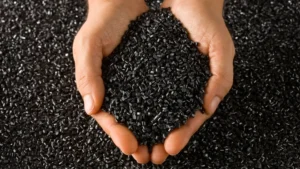
The Cleaner Seas Group is developing a world-first Microfibre Recycling Centre in Bude, Cornwall. This...
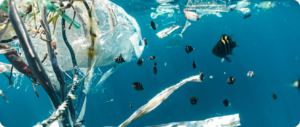
Since 2017 Cleaner Seas have worked at grassroots level in raising awareness about microplastics in...

Monty Halls is a broadcaster, speaker, naturalist, former Royal Marine, marine biologist, travel writer and...
The 30th November 2021 saw another big step forward in the fight against microplastic pollution....
Since 2017 Cleaner Seas have worked at grassroots level in raising awareness about microplastics in...

Monty Halls is a broadcaster, speaker, naturalist, former Royal Marine, marine biologist, travel writer and...
Get monthly ocean news, offers, events and updates on our mission.
By clicking subscribe, you agree to our Terms and Conditions.